Should you bid? A checklist for your first opportunity
Published
A notice matches your line of work. The deadline is still open. You can already picture your company doing the job.
Pause before opening a blank proposal.
A useful bid decision answers a harder question: can you submit a compliant response and deliver this particular contract at a price that works for your business?
Use one notice all the way through this review. A title or short summary can help you spot a lead. You need the current solicitation, meaning the government’s request for bids or quotes, and its attachments to decide.
How do I know if I should bid on a federal contract?
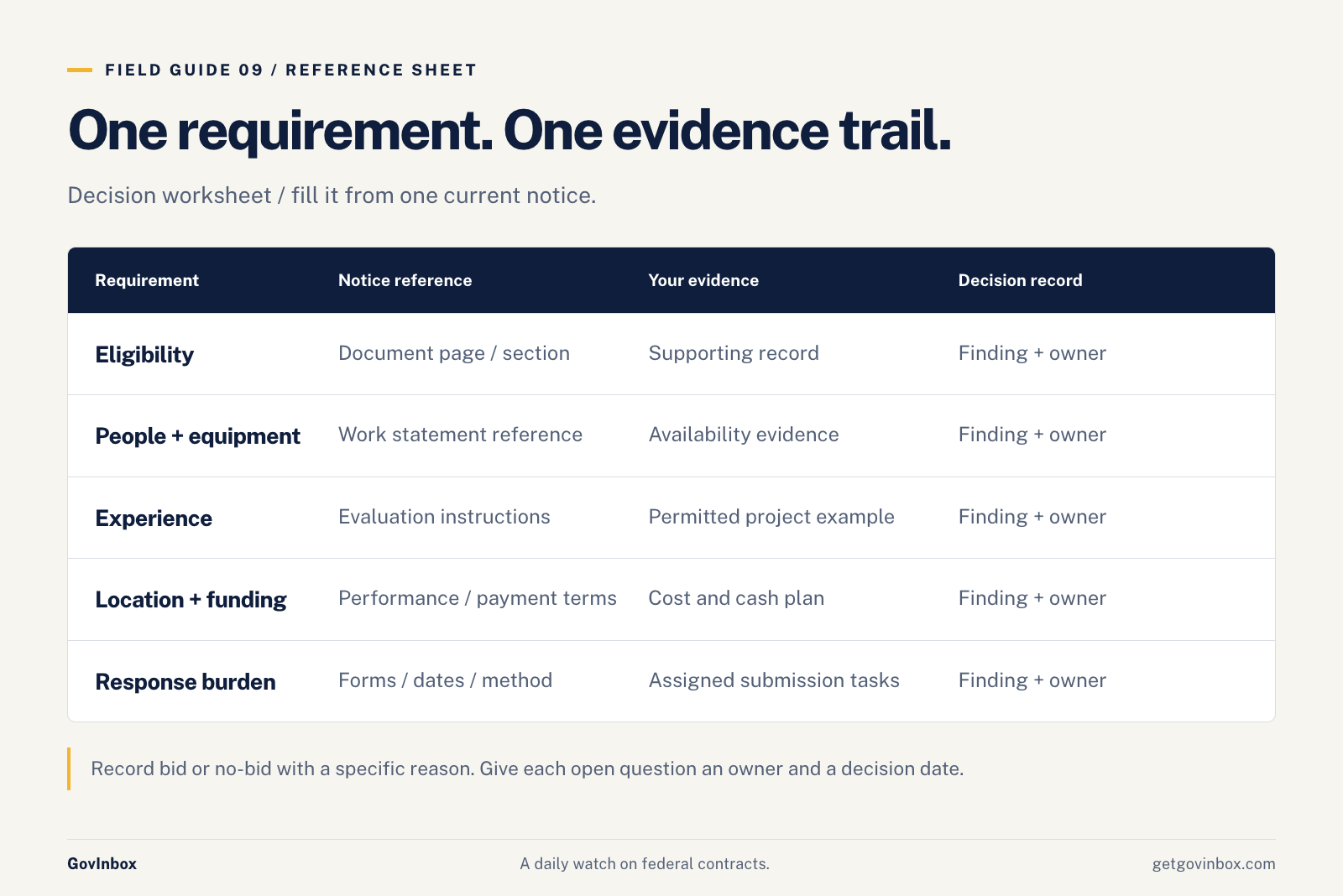
For that notice, create a decision sheet. Put the official link at the top and record when you checked it.
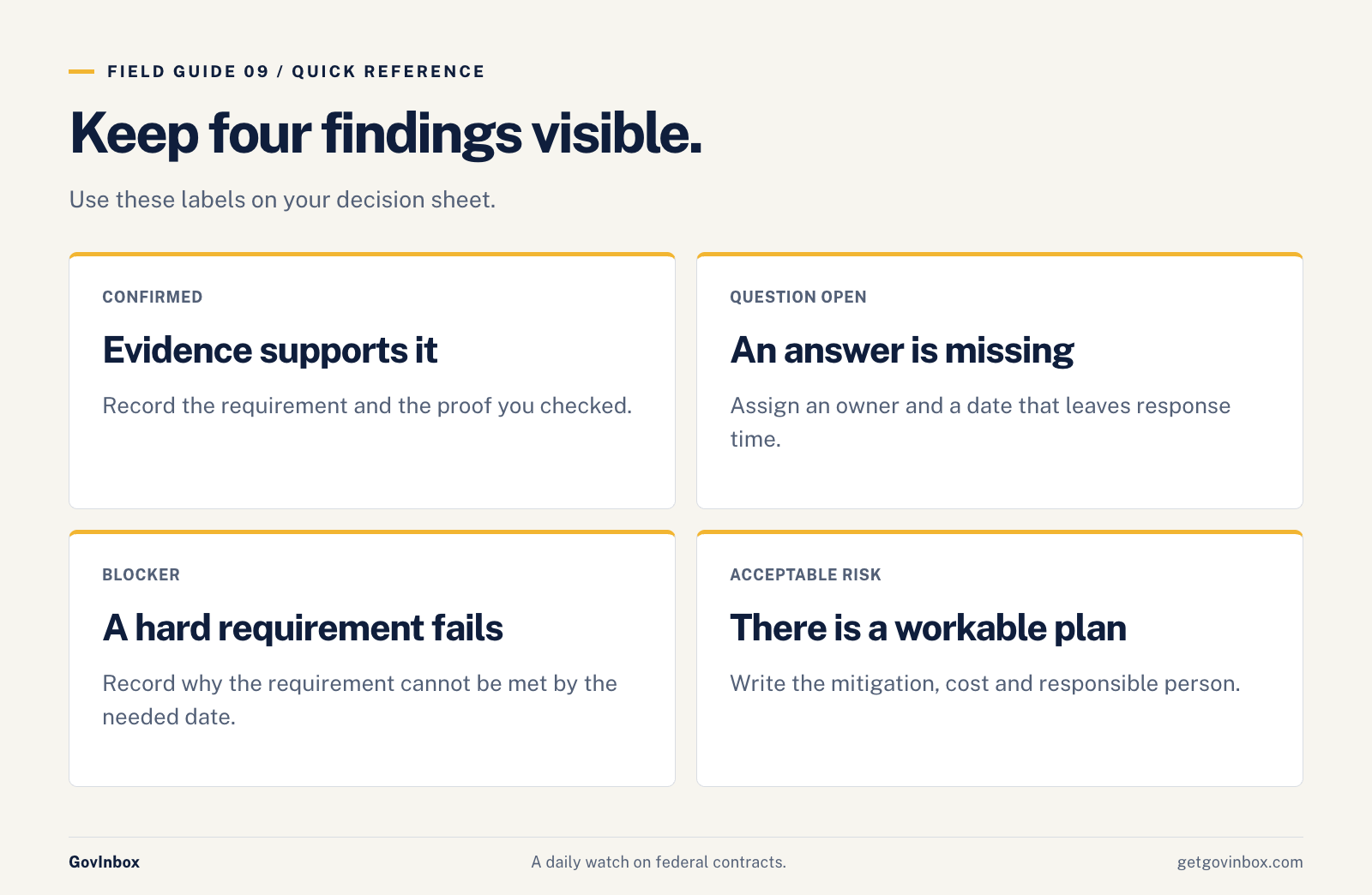
Use four labels for your findings: confirmed, question open, blocker, and acceptable risk. An unanswered question should stay visible. Do not quietly turn it into a yes.
Can your company compete?
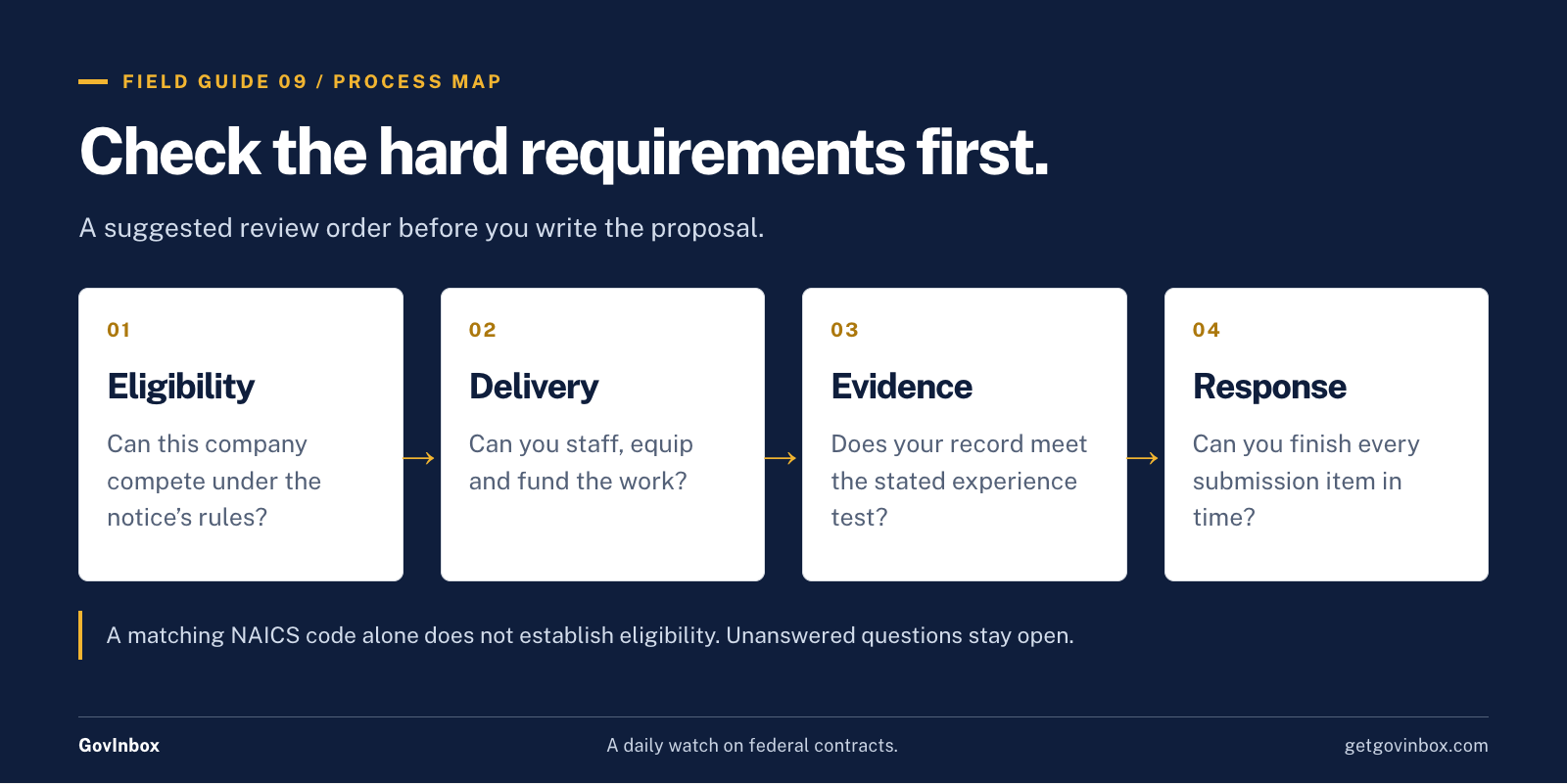
Check eligibility first.
A set-aside is work reserved for businesses that meet stated size or program requirements. If this notice has one, confirm that your company qualifies under the rules that apply to this purchase. If it is unrestricted, check the other entry requirements anyway.
Look for required licenses or access to a specific contract vehicle, an existing agreement the agency uses to place orders. Review security requirements and registration status.
Copy each hard requirement from the watch example onto your sheet, with its page or section number. Mark anything your company cannot meet by the required date as a blocker.
A matching industry code alone does not establish eligibility.
Could you deliver the work?
Read the statement of work, the document describing the required job.
List the people you would need and when they would need to start. Check their actual availability against current commitments. Ask whether needed equipment or supplies can arrive on time.
Then review cash needs. You may have to cover expenses before payment arrives. Put those expenses beside your available funds and likely payment timing.
Federal responsibility standards address matters such as financial resources and the ability to meet schedules. Your internal review should take those delivery questions seriously too. Federal contracting rules describe these standards.
Does your evidence meet their test?
Find the instructions for experience and past performance, meaning evidence of similar work and how well you performed it.
Read the exact wording. A request for relevant examples may allow work outside the federal market. A minimum requirement for completed projects could create a different hurdle.
For the watch example, write down which project you would submit for each requirement. Identify any gap. Confirm whether the notice allows a subcontractor’s record or personnel experience to count before relying on it.
“I could do this” needs evidence the agency is allowed to evaluate.
Can you work where they need you?
The agency’s mailing address may differ from the place of performance, where you must do the work.
Check required site visits and on-site hours. Review travel costs, access delays, and any local license requirement. Remote work is available only if the solicitation permits it.
An opportunity can fit your skills and still be a poor geographic fit.
Can you finish the response?
Work backward from the current deadline, including its time zone.
Account for questions due earlier, required site visits, supplier quotes, and review time. Count the submission burden: forms, page limits, pricing sheets, and any required portal account.
Assign an owner to each piece. Check whether the people you need can meet those dates.
Make the decision
Bid when the hard requirements are met and the remaining risks have a workable plan. Choose no-bid when a blocker remains, the work would strain delivery, or the response cost outweighs the opportunity.
For an open question, set a date to resolve it. That date must leave enough time to prepare the response.
Use this checklist on the next notice:
- We qualify under the stated eligibility rules.
- We can meet every mandatory requirement.
- Our people and resources can support delivery.
- Our evidence meets the experience instructions.
- The location and travel costs work.
- We can fund the job through expected payment timing.
- We can complete and review every submission item.
- We checked the latest amendments, the official changes to the solicitation.
- Open questions have owners and decision dates.
- We recorded bid or no-bid, with a specific reason.
Complete the sheet before writing your first proposal page.