Past performance from zero: how new firms build credibility
Published
Your company is new. The solicitation asks for past performance.
That can feel like a locked door, especially if every project on your resume belonged to a former employer. There are ways to build a record, but the rules of each opportunity decide what evidence counts.
Start by separating company history from the experience of the people you plan to use. Both may matter. Label them accurately.
Experience and past performance answer different questions
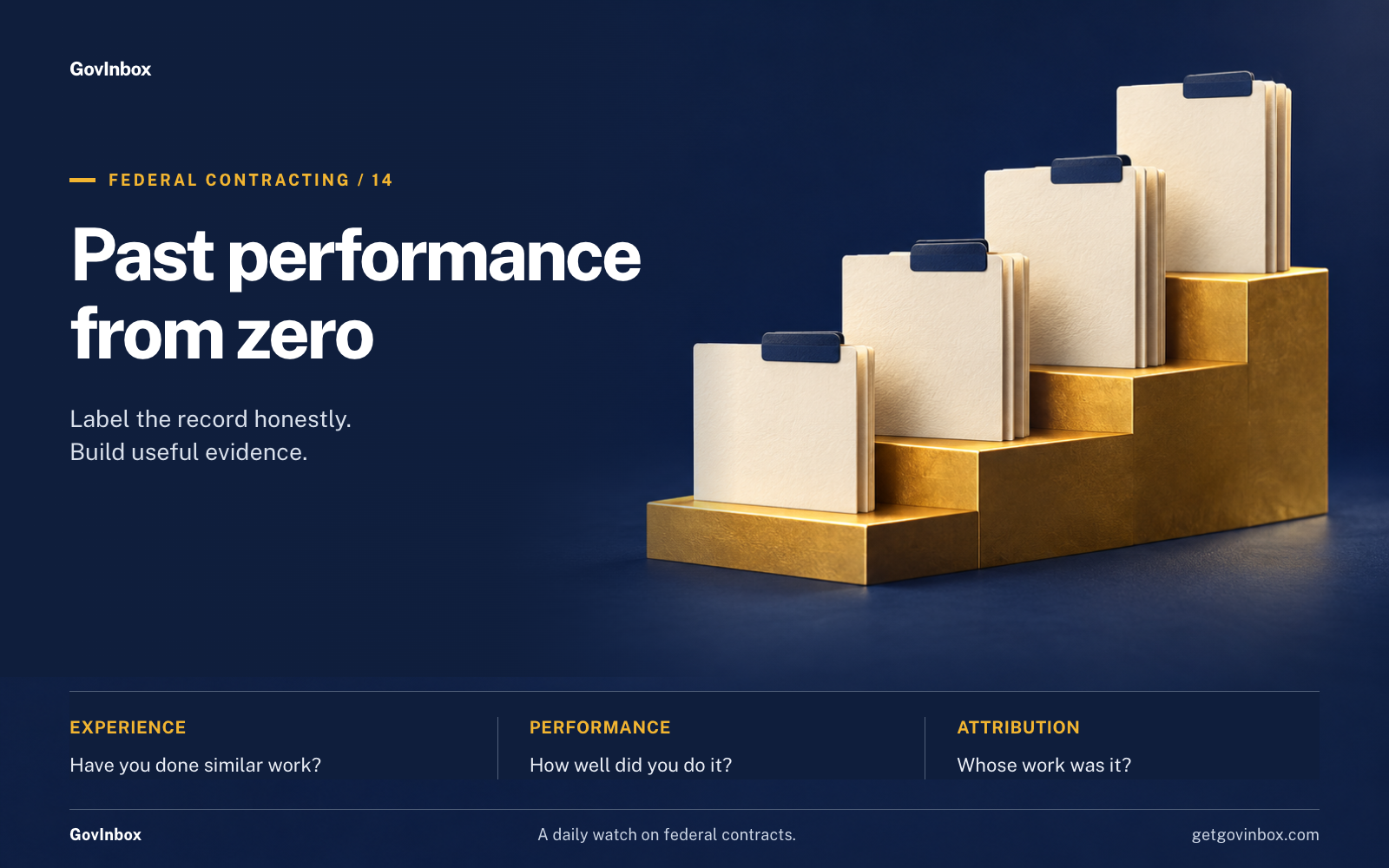
Experience asks whether you have done similar work. Past performance asks how well you did it.
A firm might have experience with the right task but poor customer feedback. Another might have strong feedback on work that is too different to count as relevant.
Relevant means sufficiently similar under the solicitation’s standards. Compare the work’s scope and difficulty. Check its size and how recently it was done.
The Federal Acquisition Regulation, or FAR, is the federal contracting rulebook. For negotiated purchases, the proposal-based buying process covered by FAR 15.305, the solicitation must explain the evaluation approach. The rule allows similar federal, state, local, and private work to be identified. It also says a firm without relevant past performance may not be rated favorably or unfavorably on that factor.
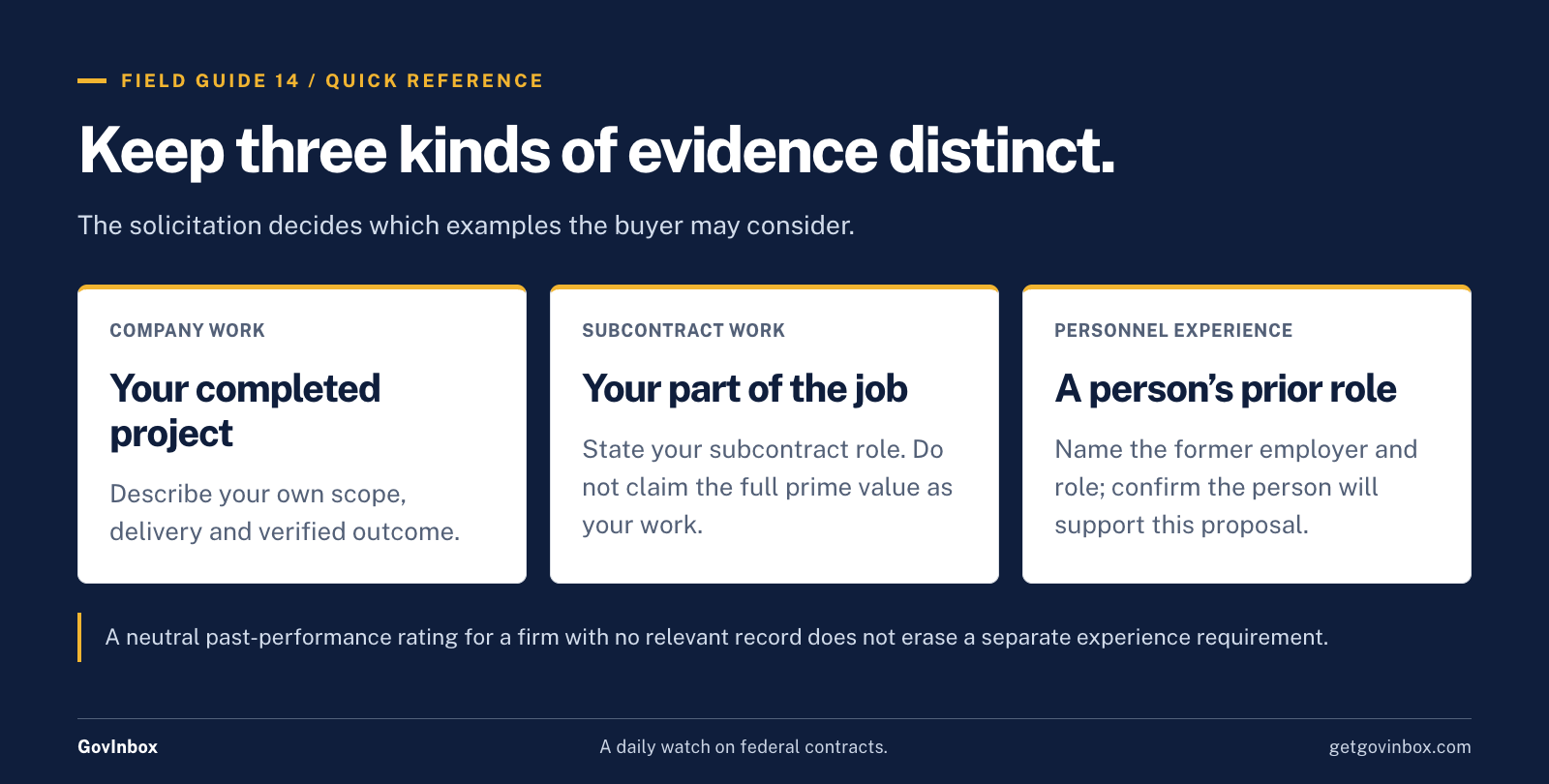
That neutral treatment does not erase a separate experience requirement or guarantee an award. Read both.
Commercial work can support your case
Look at jobs you have already completed for private customers.
A commercial maintenance project may show the same repair skills a federal buyer needs. Explain the match through the actual tasks. Do not rely on the customer name to make the connection.
Record what your company delivered and who can verify it. Keep the contract or purchase order, plus evidence of acceptance.
If the solicitation asks for customer questionnaires, confirm that your reference can respond before listing them. Ask permission before sharing private contact details.
State and local work can build a record
A city or county project can provide evidence of delivery. So can work for a public school system.
Choose work you can perform well and that relates to the federal services you plan to sell. A finished project with a clear result gives you more to discuss than an unrelated job pursued only for a government customer name.
Keep the same records you would want for a federal response. Document your own scope and any problems you corrected.
Subcontracting can give you a defined start
As a subcontractor, you perform part of a contract for the prime, the company holding the government contract.
A focused work package can let you build experience without managing the entire job. SBA explains prime and subcontracting roles.
Before starting, agree on your scope and ask how the prime will document successful delivery. Keep your own evidence. State your subcontract role accurately in future responses.
Do not list the full prime contract value as if your firm performed all of it.
Personnel experience needs a clear label
Key personnel are the people identified for important roles on the proposed contract.
Under the applicable FAR evaluation approach, relevant personnel experience or a major subcontractor’s record should be considered when relevant to the purchase. Check the solicitation’s instructions before relying on that route.
If an employee performed a project at a former company, say so. Explain the person’s role and confirm that the person will actually support the proposed work.
A resume is evidence about a person. Keep it distinct from a claim about your company’s completed contracts.
A 90-day plan you can start
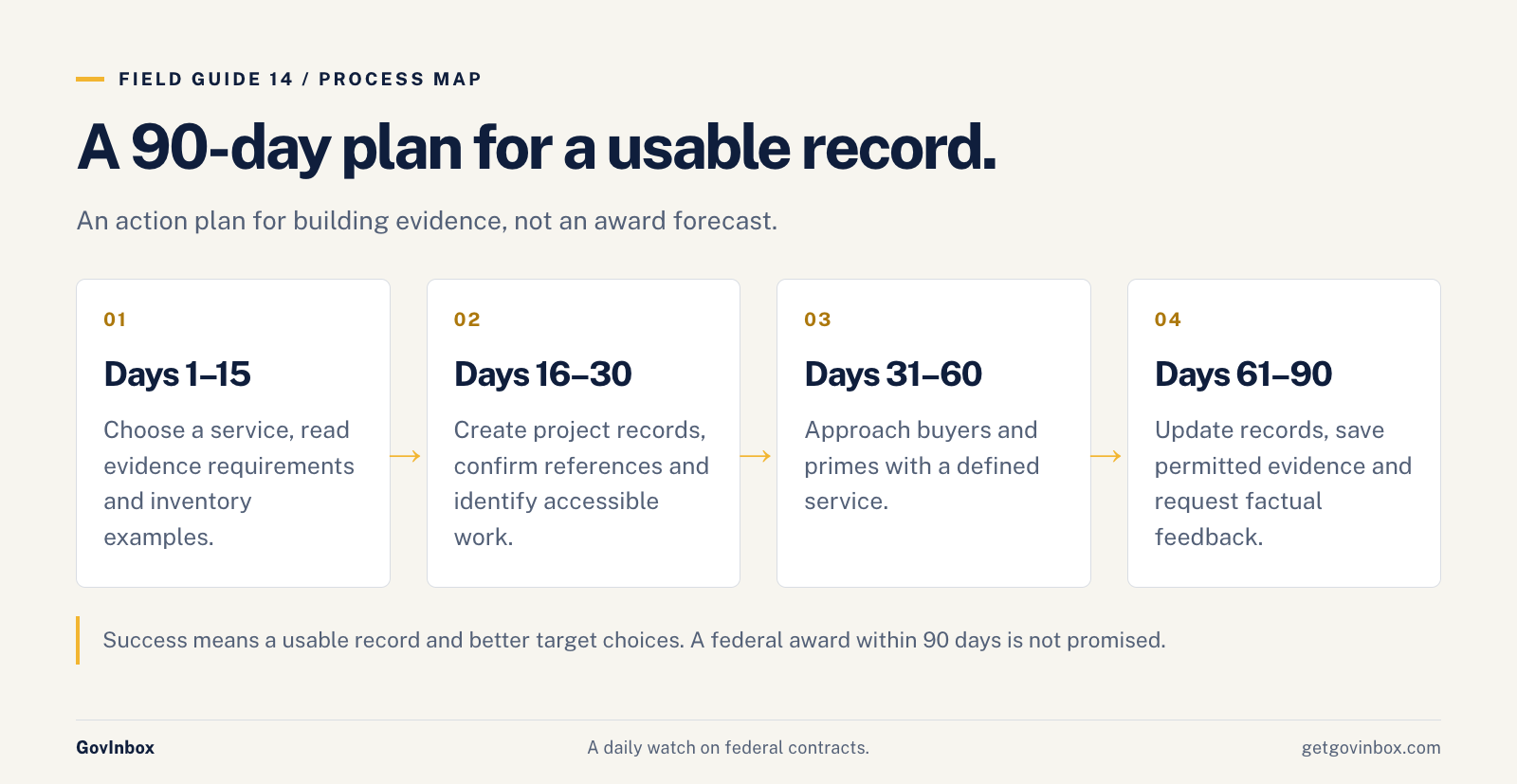
Days 1 through 15: choose a narrow service you can deliver now. Review target solicitations and write down their evidence requirements. Inventory existing projects and personnel experience.
Days 16 through 30: turn permitted examples into short project records. Confirm references. Identify accessible commercial jobs or subcontract work that would build relevant evidence.
Days 31 through 60: approach suitable buyers and primes with a defined service. Pursue work you can price and perform responsibly. Ask what documentation they will provide after acceptance.
Days 61 through 90: update each project record as work progresses. Save accepted deliverables where permitted and request factual customer feedback. Review which federal requirements your evidence now meets.
A federal award within 90 days is not the measure of success for this plan. A usable record and better target choices are.
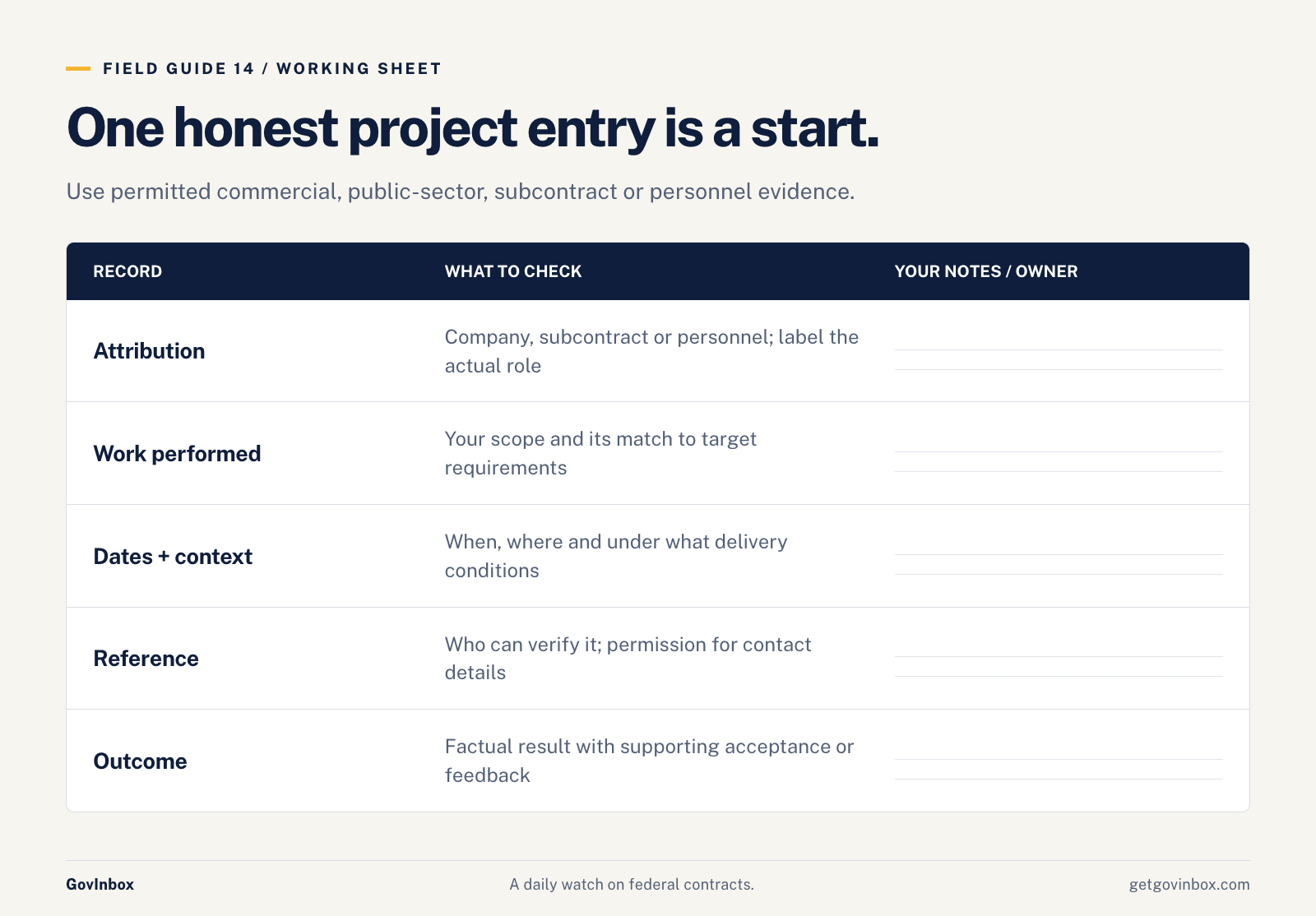
Today, create a project log with fields for your role, scope, dates, customer reference, and verified outcome. Add the first honest entry, even if it is commercial work.